IN WHICH I BID ADIEU TO JELLY BELLY

Today was such a hard day. Today was so filled with love. Today was so filled with pain. Today was such a hard day. After almost 15 years of near constant companionship, I put my dear Jelly Belly to sleep forever.
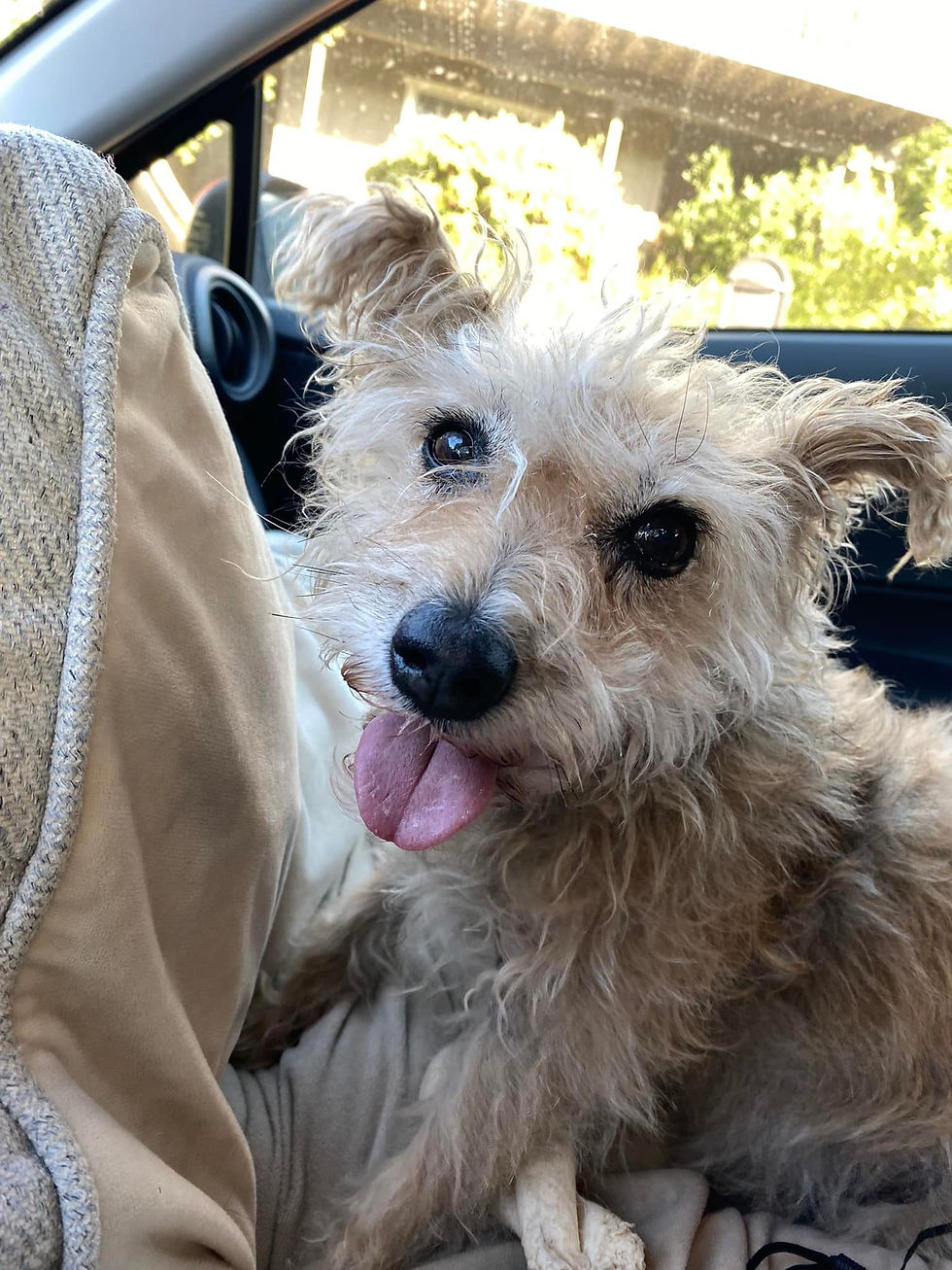
I got Jelly when I was 22 and just moving to Nashville. I had just started my first year teaching in disadvantaged schools and was struggling. Hard. I desperately needed a friend-- someone who would look at me every day and not realize how young and scared and unready I was. I went to an animal shelter and spotted her-- sick, skinny, covered in road tar, and sad. But there was something about her. She was so gross and weirdly greasy at first that I would only let her sleep on a towel (even after many baths). She needed every kind of antibiotic and dewormer known to man and three months of quality food before she started to look sort of normal. She came to my college classes with me every day and had her own seat. She followed my roommates around the house when I was at work and slept in my bed. We were happy.
When I moved into my own place for the first time and there were no more roommates to hang around with, she got lonely. I felt I owed it to her to figure out a way to make sure she was happy during the day, and I approached my neighbors (who worked from home) and asked them to let her out a few times during the day. They did so much more than that. They became her surrogate parents and she began a new chapter of her life sleeping under a massage table and greeting clients. She came home to me each day smelling like essential oils and incense and she we were happy.
When I chose to move cross country in the middle of the pandemic, she rode in my lap on the flight from Nashville to California, threw up the moment we landed, and then several times in the passenger seat on the five hour drive to Nevada to quarantine. When we arrived at our teeny cabin, she got out of the car, shook it off, selected a prime spot to deer-spot on the front porch, and that cabin became home. And we were happy.
When we had finished quarantining, Jelly came with me to live with my uncle and cousin for the summer. She took hikes with us every evening and spent every morning sitting under my chair during those first long, hard months job hunting in a terrible economic climate. When I landed a job and we finally moved into our first California apartment, (which had plywood floors, no kitchen, and no heat), she curled up beside me on my camping mat (which was all we had in the beginning) and that cold little corner of the world became home and we were happy.
For the past two years, Jelly came to work with me every single day. She greeted and cuddled so many students with disabilities every single day. She patiently sat next to them during their tantrums and tough moments. She ate the crumbs they spilled. She was loved. And we were happy.
Over the past year or so, I have watched Jelly slowly decline. Her seizures became more frequent and intense. Her shaking intensified. She lost her hearing and some of her sight. She was constantly thirsty and constantly hungry. Her arthritis made it hard for her to walk on wood floors. She struggled to regulate her body temperature and stopped sleeping in bed with me, preferring instead to curl up on the floor in front of a fan. She woke me up 3 times each night to go outside and drink more water. Sometimes she would get confused or lost in the house. Sometimes she would forget who I was and startle when I touched her. Every day she would miscalculate stairs or run into door jams. She struggled to get comfortable. She paced anxiously at night. We were not always happy.
The vet told me that it was obvious she was a very geriatric pet, and recommended that I take her off all her meds, even her flea meds, because her liver enzyme levels were suspect. There were no seizure meds anymore that would work effectively without poisoning her liver. A neurologist was recommended. I was told that another big seizure could be the end for her.
A couple weeks later, that big seizure happened. She had chosen to come into the bed with me that night which was unusual. She curled up right against my back which was even more unusual. At 3am, she began screaming and convulsing. She lost control of her bowels. Somehow, she made it through. But she didn't want to get up the next morning. She got lost trying to figure out how to get outside. I wondered if she was still happy.
I knew I didn't want her to go like that, screaming and scared and soiling herself. I didn't want her to feel distress as she passed. I wanted her to feel loved. I realized that I was now living with the constant anxiety of wondering if she was in pain or about to seize, or if she was feeling confused and distressed. I realized that too often the answers to all those questions was "yes". I cried at my desk while I ate lunch that day. Jelly snored gently at my feet while I called the vet and made the hardest appointment of my life. Saturday. In four days she would go to sleep forever.
I cried between students all afternoon. I informed my bosses that I was going to have an exceptionally tough weekend and took Monday off. I cried all the way home. I cried while I ate dinner. I cried myself to sleep. I knew I had to prepare myself or I was not going to be able to get through Saturday. I needed to know exactly what was going to happen. I forced myself to read narratives, watch videos, and review the medical procedures. I knew that the more difficult the research I did in advance, the more prepared and less afraid I would be. I didn't want to be afraid. I was okay with being sad, but not with being afraid. We had four days left.
Since Jelly had been coming to work with me for a couple of years, all my students know her. They also all have developmental disabilities and, I knew, would need coaching. I imagined all of those well-meaning students coming to my office in droves and asking hard questions and me struggling to get through the answers. Or worse, not saying or doing anything. I knew I was going to have to prepare my team to support them (and me). I also didn't want anyone on my team to have to break the news to students themselves. So, while I cursed my diet for cutting so much alcohol out of my diet, I sat down with a mournfully clear head to write the email my team needed to distribute. It explained to the students what happened and the fact that I was sad. It explained that it was important to acknowledge people's grief and listed some appropriate ways to do so. It reassured them that I would be okay and things for them would continue as normal even if I was sad for a little while. I included a separate email to be distributed to the rest of the staff with details about everything-- Jelly's exact ailments, the process of euthanasia, what I planned to do with her remains. Everything I could think of that students might ask and that I did not want to answer. I gave the staff permission to disclose any/all of that information to students who asked. I included a list of students who I knew would struggle and suggested some ways to guide them. I looked longingly at my wine rack. I reread the emails over an over until it felt real. My dog is going to die, I told myself. Know that this is real. Don't ignore this. Know that this is real. We had three days left.
The next day, I began imagining how I wanted those final moments with Jelly to be. She was so uncomfortable in most environments by that point that I did not feel the need to take her on a hike or to the beach. I knew she would be happiest spending her final days at home. I thought about bathing her, but that would have been for me, not for her. I decided against it. I want her to die in her bed, I thought. I decided that I did not want it back after. I decided to be in the room with her. I decided that I wanted her to die while eating a happy meal. Isn't that all any of us could hope for? I thought. I couldn't decide between a hamburger or chicken nuggets so I got both. I decided I would start feeding her in the car on the way to the vet so she did not get an upset stomach. I decided to cremate her and keep the ashes. I decided that she would die in my arms. We had two days left.
The next day, I began imagining how I wanted those first hours of terrible grief to be for me. I asked my parents to spend the day with me and for my father to be in the room with me during the euthanasia. I asked my mom to make a pot of chicken soup. I set up the living room sofa with blankets and pillows. I added tissues to my grocery list. I made a list of movies or shows I might want to watch. I made sure one of my most comfortable outfits was clean. I knew I was not going to be sleeping that night. I flopped on the couch and sobbed intermittently which watching The Office. I pet Jelly as much as she would let me. I took pictures of her. I told her how I felt about her. I said goodbye. I said thank you. The minutes dragged by. What do you do with the final 12 hours you have with your dog? I thought. This, I thought.
In the morning, I did some work around the house. I washed the pile of clothes Jelly had been sleeping in. I cleaned her poop up from the backyard. I mopped the floors. I took a shower. I changed into the outfit I had planned. I ordered her happy meal. I stared at the TV as her final minutes in our home ticked away. When the time came to leave, Jelly was only too happy to let me leash her up and lead her outside. She was thrilled to be getting in a car. She was overjoyed to begin eating apples in the backseat. I reminded myself that this was not a betrayal; that she was not capable of comprehending the concepts of life and death as they related to her. She was blissfully unaware that these were going to be her last minutes on earth. Her last minutes with me. The last minutes of us.
Jelly trotted happily beside me as we walked into the vet office. I noticed that there was a candle burning on the counter with a sign informing people that someone was saying good-bye to their pet and to please be quiet and respectful. I realized that sign and that candle were for us. I took Jelly into a room with an orange fleece blanket spread out. I put her in her dog bed on the table and began feeding her chicken nuggets and french fries. The doctor put in an IV catheter (which I knew from my research was to ensure that Jelly would only have to be stuck once and to ensure that the medicines acted quickly). With the catheter in her leg, I fed her bits of hamburger. The vet came in and asked if I was ready and I said I was. While I kept Jelly preoccupied with the last of her fries, the vet flushed her line with saline and administered a mixture of main medication and sedatives. Jelly started getting sleepy and I arranged her in her bed and held her head in my arms. The vet administered the lethal dose of drugs meant to stop her heart. I stroked her as her breathing shallowed and her eyes slowly lost focus. She was gone. There were no more days left for us.
I sat there for a while feeling her weight in my arms and stroking her face. I couldn't bear to think that a day would come when I would forget what she felt like and all the different colors in her fur. When I would forget just how she liked her ears stroked. I was surprised how much I did not want to leave her body alone. She was still warm. It still felt so much like she was there even though I knew she wasn't. It took everything in me to lift her head off my arm and place it on her bed and kiss her one last time. It took strength I didn't know I had in me to leave her in that room.
I would say the next 30 minutes were easily some of the worst of my entire life. I clipped up one of the leads on my tandem leash. I didn't need it anymore. I picked up the empty apple bag from the backseat. My sweatshirt was covered in her fur. I walked into my now emptier house. I walked past Jelly's empty food bowl. I looked at the couch-- the place I had prepared for myself to be sad. The place Jelly had been sleeping just an hour earlier. As my parents worked together on the pot of soup for lunch I contemplated my new, surreal reality. Jelly was gone. Our story had come to a close.
I know that my choice to end her life was an act of love. And that this sadness is the price of that love. Part of me does not want to let go of this grief because it is so very close to what me and Jelly were. Part of me does not want that to fade. Does not want her to fade. Does not want her important role in my life to be reduced to a box of ashes and a passive thought. In a way it was a luxury to be allowed a day to be emotionally so with her. I know that my time to be so absorbed in her is limited and then I will have to start moving on. I know that next week I will be expected to perform while I graciously accept the condolences of my peers and students and family. I will collect her ashes from the vet. It will immediately become a horcrux and I will struggle to figure out what to do with that horcrux. I will hide it for a while because looking at it will be too painful. The minutes and hours and days spent not thinking about her will pile up. And at some point I will take that box of ashes back out and the horcrux will become an albatross-- something significant and emotional that I will feel compelled to carry. And that the day when I let that albatross go could be years in the future.
In one of my favorite plays, "Rabbit Hole", there is a character who describes grief. I don't have it exactly right, but she describes the early days of grief as a boulder. Something crushing you from above such that every breath is a struggle nd something you can't take for granted. And that over time that boulder becomes an anvil. Something outrageously heavy that you carry on your shoulders, but sometimes you can glance out from under it. And over time that anvil becomes a backpack full of concrete; something that you can carry around with you. It hurts your shoulders and wears you out after a while but there are a few minutes each day when you can maybe even forget that you are carrying it. And that backpack turns into a single brick. It's too big to put in your pocket so you carry it in one hand or the other. It is a hindrance and one side of you always feels unbalanced, but you can more or less go about your day. And then that brick finally turns into something like a beach stone. Something you can carry in your pocket. Finally tucked away, you spend less time considering it. It shrinks slowly in that pocket until you can't even tell it's in there anymore. Except that every once in a while, you reach your hand into your pocket and there it is.
Today I am under a boulder. I don't know how many days it will be until I have a small, polished stone in my pocket. But on that day, I know that stone will be so beautiful to behold because Jelly had such a beautiful soul. And I hope that on that day I feel joy at its discovery instead of sadness.
Rest in peace, Jelly Girl. Eat lots of chicken in heaven. I will always love you.
Comments